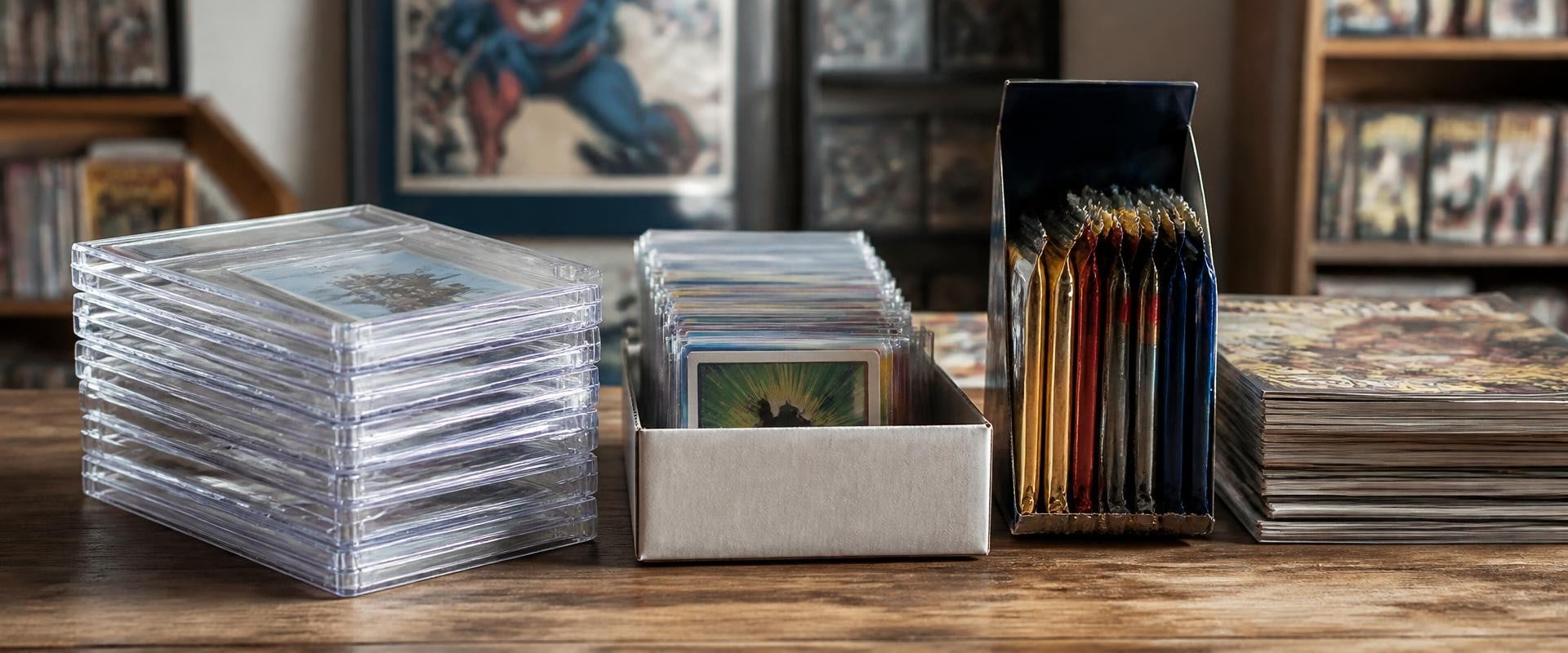
If you collect comics, a card listing can feel familiar right up until the buying options appear. There are variants, limited editions, graded copies, and familiar characters. Then the seller asks you to choose a booster, a repack, or a slab pack. Those labels describe different ways of buying, not a simple ladder from basic to premium.
Disclosure: This site and Rip.fan share an owner.
Before comparing prices, decide whether you want a particular card, a playable collection, artwork you enjoy, or the surprise of opening something. That decision makes the formats easier to judge.
1. Start with what you want to keep
A comic reader looking for one artist's work may be happier choosing individual cards than buying packs with an uncertain mix. Someone learning a trading card game has another question: will these cards help them play? A collector who enjoys the reveal may deliberately choose a random product, provided the cost is comfortable even when the result is unexciting.
Write down one sentence before shopping: “I want cards featuring this character,” “I want to learn this game,” or “I want one pack-opening experience.” It gives you a reason to pass on an appealing product that does not serve your goal.
Buying a known single also belongs in the comparison. You can inspect its identity and condition before paying, although seller reliability and authenticity still matter.
2. Understand manufacturer-sealed packs and boosters
A manufacturer-sealed pack comes from a particular release with a stated configuration. In trading card games, “booster” commonly describes a pack that adds cards to a collection. The details depend on the game, set, and product version.
For example, Wizards of the Coast distinguishes formats intended for opening and drafting from other collector-focused products in its Magic product guide. That does not make the contents of one Magic booster a rule for every game or release.
Read the exact product description. How many cards are included? Which types are guaranteed, and which are merely possible? Are advertised odds for that configuration? A picture of a desirable card on a sales page is not, by itself, a promise that your pack will contain it.
“Factory sealed” describes the package's status. It does not answer whether you will like the cards inside.
3. Check who assembled a repack
A seller repack is assembled from inventory selected by the seller rather than being an untouched pack from the original card manufacturer. It may contain raw cards, graded cards, or a mixture, depending on the offer.
The useful questions are specific: How many items will you receive? What conditions or grades are allowed? Is there a complete pool or only a few examples? How is the item selected? Does a stated minimum value rely on an asking price, a completed sale, or the seller's own estimate?
If those details are missing, ask before paying. A repack label alone does not establish either poor quality or good value. Judge the actual description and whether you would accept the less exciting outcomes it permits.
4. Separate the slab from the pack
A slab is a protective grading holder, not a type of factory booster. Its label identifies the item and a grading company's assessment. Consult that company's standards rather than translating a familiar comic grade directly into a card grade. PSA's card grading standards, for instance, describe its own scale and condition criteria.
A slab-pack offer adds another layer: you are buying a selection process involving graded items. Check the number of items, permitted grades, available pool, delivery terms, and whether the reveal represents a physical card you can receive.
For the online version of this format, Rip.fan's slab-pack explainer describes how a graded-card reveal can differ from opening a manufacturer-sealed booster.
Check certification details when available, but do not stop there. PSA warns that a matching number in its certification database does not eliminate counterfeit risk. Compare the record with the actual item and assess the seller too.
5. Use this comparison before buying
| Format | What to establish before payment | Best question to ask |
|---|---|---|
| Sealed booster | Exact set and pack configuration | What is guaranteed, rather than pictured? |
| Seller repack | Seller's contents and selection rules | What are the least exciting permitted outcomes? |
| Slab-pack offer | Item count, grades, pool, and fulfillment | Can I receive the physical item, and on what terms? |
| Known single | Exact card, photographs, and condition | Does the item match the description and records? |
None of these formats automatically offers the best collection or financial outcome. Pick the one that fits what you want to own. If your goal is one character, one illustration, or one exact card, paying for uncertainty may simply add a step you do not need.


